The commuter market helps drive South Africa’s retail growth
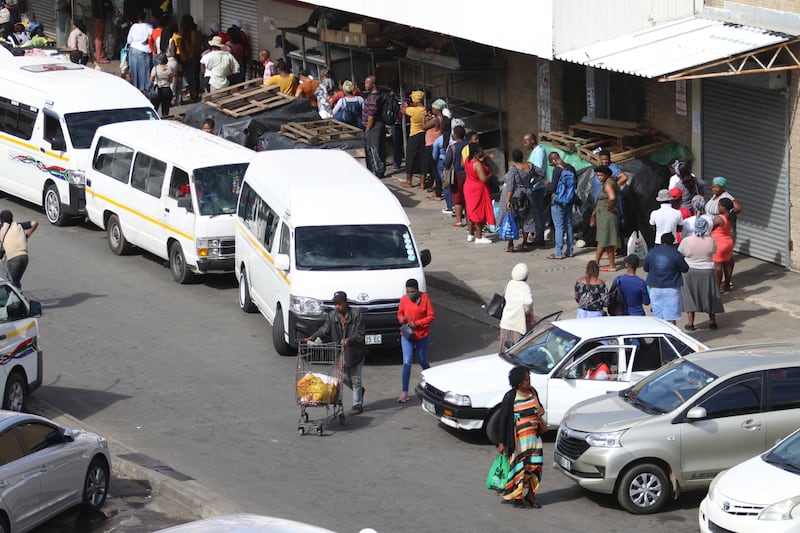
Regular passengers on taxis, buses and other forms of transport present unrivalled opportunities for advertisers
South Africa’s commuter economy is one of the country’s most powerful, yet consistently underestimated, engines of growth. It’s a market defined by movement, as millions of people travel predictable routes, at predictable times, through environments that shape retail activity, influencing the performance of fast-moving consumer goods (FMCG) sales and anchoring urban economic resilience.
More than 15-million commuter trips take place daily by taxi alone, according to the National Taxi Alliance. The trips involve a 250,000-strong fleet, operating through 1,200 associations and sustaining more than 200,000 direct jobs.
The taxi industry accounts for 68% of all public transport journeys in the country. Add the millions of people who move through bus corridors, bus rapid transitsystems, trains, Gautrain stations and retail-linked taxi ranks, and a picture emerges of a nation whose economic activity is shaped by people in motion.
Over the past decade, transit nodes, from major taxi ranks to intermodal hubs, have evolved into dense commercial ecosystems. Retailers have followed the movement. The Public Investment Corp reports that the scope of township shopping centres has expanded from less than 50,000m² to more than 350,000m² of gross leasable area, driven largely by their proximity to transport routes.
Shamy Naidu, executive director at Provantage, says commuters sustain this growth and account for a significant proportion of national spend in FMCG, telecoms, clothing, pharmaceutical and quick-service restaurant categories.
“Field studies in taxi ranks consistently show that beverages, baked goods, personal care products, sweets, snacks and over-the-counter medicines dominate daily sales, a clear indication that mobility drives proximity-based purchasing,” Naidu says.
“In dense commuter environments, exposure to out-of-home media is not optional. It’s high frequency and integrated into the daily journey. There’s no switching off, no skipping, no ad blocking, which is why it continues to outperform its weight, delivering measurable impact in environments where consumer attention is naturally anchored,” says Naidu.
“Out-of-home media, positioned along the routes where people travel, wait and shop, act as a connective thread in this space, shaping awareness and influencing decisions at the point where movement meets commercial opportunity.”
Out-of-home media, positioned along the routes where people travel, wait and shop, act as a connective thread
South Africa’s commuter economy, he adds, is one of the most powerful but least understood drivers of national retail activity. “When you have millions of people moving through transport nodes every day, you have a consumer market that no brand can afford to overlook. During difficult economic cycles, this consistency becomes even more meaningful. Commuters still travel to work. They still navigate the same corridors. They still spend on daily essentials. That stability makes commuter out-of-home media one of the most resilient and effective touchpoints in the country.”
The resurgence of rail is shifting the commuter landscape, reviving foot count around rail-linked taxi ranks, bus stops and CBD retail precincts, creating new multimodal patterns of movement that strengthen commercial opportunities.
“Where taxis, buses and trains converge (at Park Station, in Bellville, Pretoria, Berea and at Cape Town’s intermodal hub) mobility becomes concentrated and commercially significant. These environments generate repeated daily exposure to both messaging and retail access.
Commuters pass the same points multiple times a day, making these hubs among the most potent advertising and retail environments in the country,” says Naidu, adding that these customers are active spenders moving to work, shop, collect essentials or make end-of-day purchases before heading home.
“Their behaviour is habitual, their presence reliable and their economic contribution measurable,” he says.
The local commuter economy is, at its core, a retail story. It’s the market that sustains township and inner-city economies and drives consistent spend in essential categories. According to Naidu, it’s a market hiding in plain sight; one that will increasingly define the future of retail and urban economic growth.
The big take-out: The local commuter economy is one of the most powerful but least understood drivers of national retail activity.